 Kawi
Blog · the language
Kaweechelchen: the words that defeat every newcomer.
Every new arrival trips over the same handful of words, and it has become a national running joke. What gets said less often is that your child will not find them hard at all. If you are wondering how your child will pick up Luxembourgish, that difference explains almost everything.
Why these words are so hard to say
Two mechanisms, and neither has anything to do with the language being difficult. First, the same letters change value depending on the word: ch can scrape the back of the throat, hiss like the French ch, or snap like a k. Second, Luxembourgish loves diminutives and stacks them: Kaweechel becomes Kaweechelchen, a fritter becomes Kichelchen. Every added note of affection adds a syllable.
Then there is a variable nobody mentions: pronunciation shifts from one village to the next, in a country of 2,586 km². There is no single correct way to say these words, which should be a relief rather than a worry.
Kaweechelchen, the squirrel
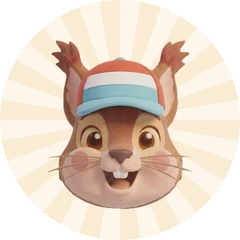
Four syllables: Ka · wee · chel · chen. The first ch scrapes the back of the throat, the second is softer. This is the word the Ministry of Culture chose as the mascot of Luxembourgish Language Day, precisely because everyone stumbles on it.
It is also where our app takes its name from, and we tell that story elsewhere: why Kawi is called Kawi. The first two syllables, said at a child's height, give Kawi. The rest comes later.
Gromperekichelchen, the potato fritter
Six syllables, with a reward at the end. Gromper is the potato, Kichelchen the little fritter. You eat them at the Schueberfouer and at every village fair, served with apple sauce. The word is long but it breaks apart cleanly: Grom · pere · ki · chel · chen. For many people it is the first Luxembourgish word they genuinely learn, because you have to be able to order one.
Seechomes, the ant
This one traps you differently: it is short, so you assume it will be easy. See · cho · mes, where the ch scrapes the throat again. It sits among learners' favourite words, along with Muckefuck, the post-war barley coffee.
What your child does with these words
Nothing special, and that is the whole point. Before the age of 6, a child still reproduces sounds an adult no longer hears as distinct. Your child will not learn Kaweechelchen as a lesson, they will absorb it, on one condition: hearing it properly pronounced, several times, without being asked to repeat.
That is exactly why our first words with the official pronunciation are tapped and replayed rather than read. And if you would rather start with something gentler than these three, Moien comes out right the first time.
Hear them, before saying them.
Kawi plays words from the classroomroom with the official pronunciation from LOD.lu, with no reading and no written instructions.