 Kawi
Our story
Your child starts by saying « Kawi ».
One day, they'll say « Kaweechelchen ».
The first two syllables, said at a child's height, give Kawi. The rest is the journey.
01
It all started at school
We live in Luxembourg, like many families who came from somewhere else. At home, we speak French. Then our son started school.
In class, he naturally stayed with the children who spoke the same language as him. It was easier. But of course, it gave him fewer chances to practise Luxembourgish.
So his teacher lent us an electronic pen with picture cards: you just pointed the pen at a picture to hear the word in Luxembourgish.
It helped him learn his first words. And, without us knowing it yet, that very simple idea would also give rise to the first idea behind Kawi: see, touch, listen, then do it again.
But above all, one thought stayed with us: we wished we had started before school began.
Not to teach him Luxembourgish at three. Just so that the language wouldn't be completely unknown on the day he walked through the school door.
She's a speech therapist, I'm a designer. I started imagining Kawi in the evenings, on my own. And with every question, what pace suits a child, which exercise really works, when to repeat, when it gets too hard, I turned to her.
Her answers are a bit everywhere in Kawi. And if she happens to read these lines: thank you.
That's how Kawi was born: first for our son, then for every family going through the same thing.
He was the first to play it. And he's still our toughest tester: when a game bores him, we find out very quickly.
02
The real problem isn't the app, it's the first day
In Luxembourg, a large share of children never hear Luxembourgish at home. They discover it on the very first day of précoce or Spillschoul, at the same time as the separation from their parents, the group, the rules, the noise.
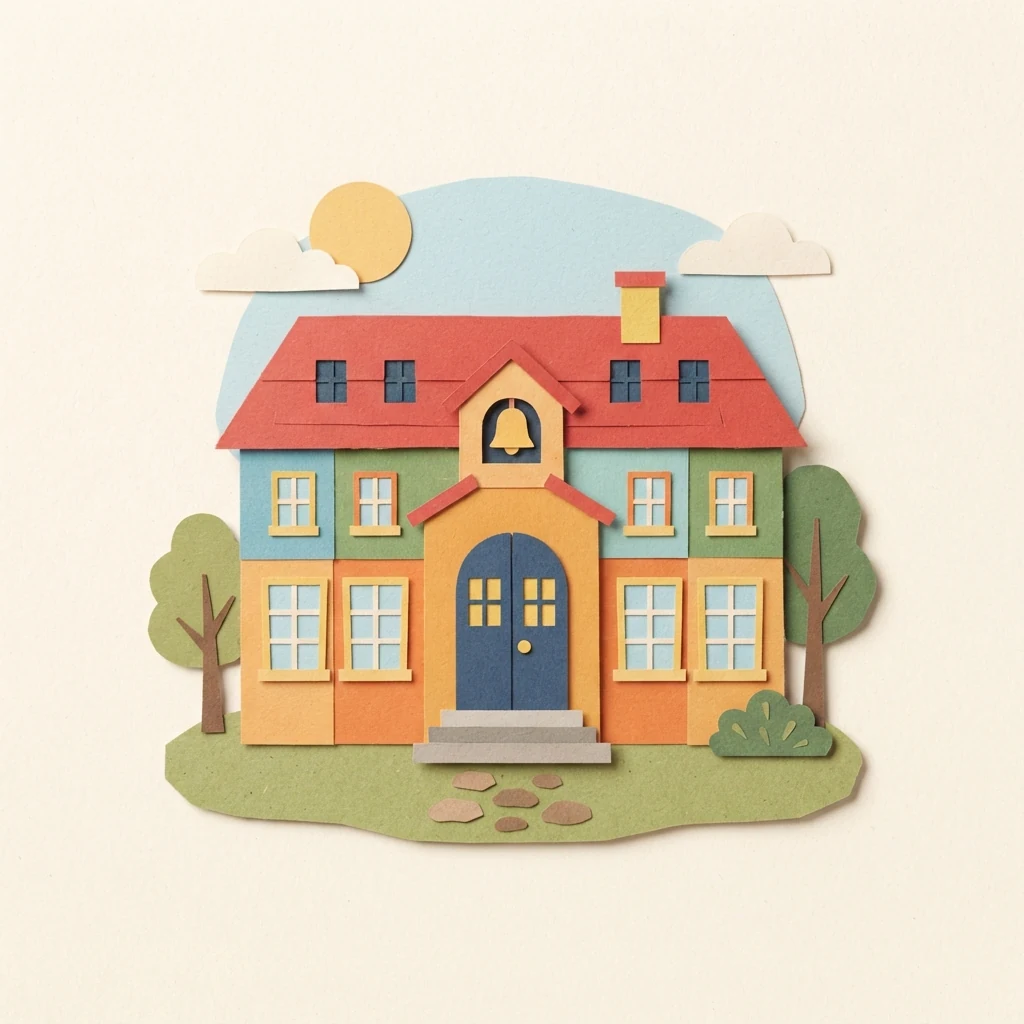 The language should be the easy part of that day. For these children, it's the hardest.
Kawi gets that moment ready. Not to get ahead of the others, but to arrive calm. To recognise a voice, a word, a nursery rhyme, and think "that one, I know".
03
So, the squirrel
In Luxembourg, the squirrel is called Kaweechelchen. Four syllables, a ch that scrapes the back of the throat, and as many pronunciations as there are villages. No newcomer gets it right first time; it's the kind of word that gently reminds you that you're just starting out.
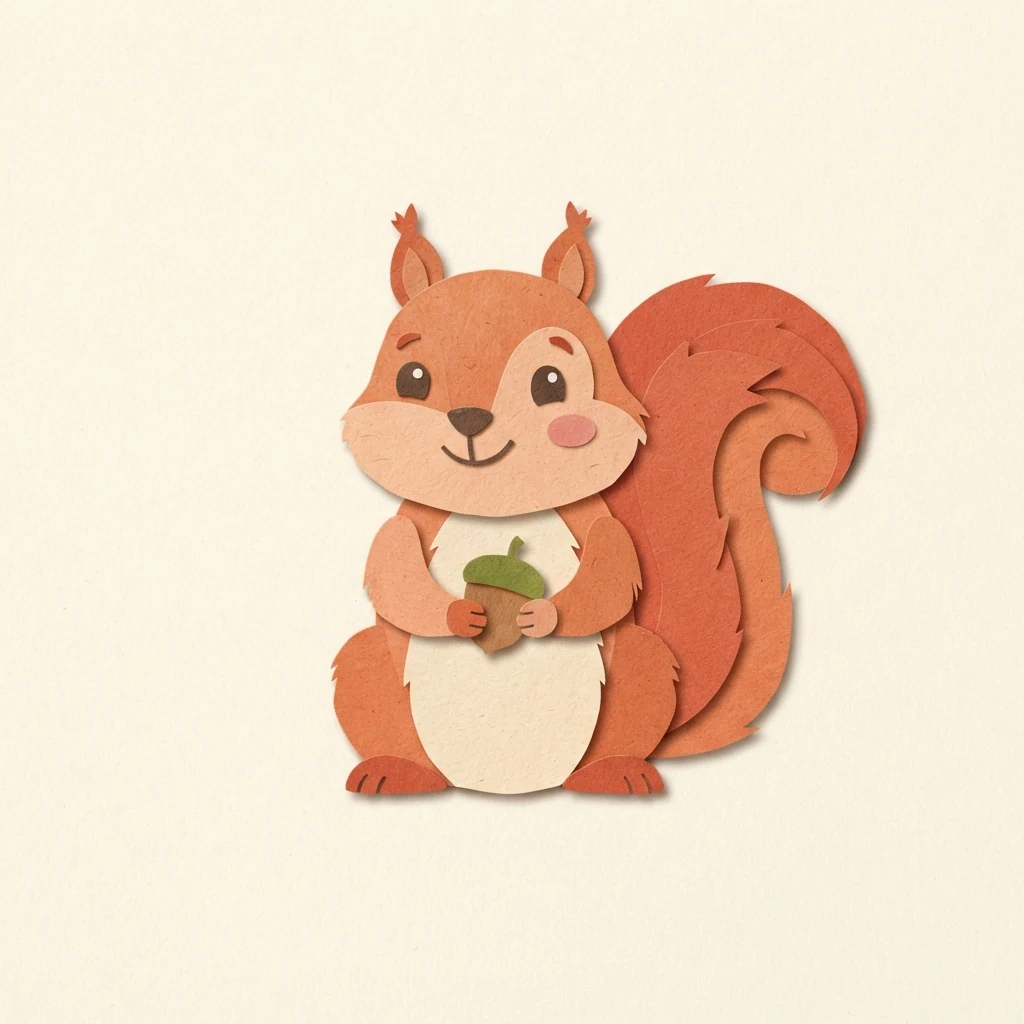 The Kaweechelchen card, just as it appears in the app.
We kept the squirrel as our mascot, and we took its nickname: Kawi. Two syllables, ka-wi. A French, a Portuguese, a German, an English speaker all pronounce it the same way. No tricky letters, you type it without a mistake. And because it's a squirrel's nickname, it belongs to no spelling: nobody can accuse you of "bad Luxembourgish" over a pet name.
04
The promise is in the name
Kawi is the easy word that opens the door. Kaweechelchen is the hard word at the end of the road. Between the two lies exactly a child's journey: start with what you can say, finish with what you thought impossible.
Your child starts by saying « Kawi ». One day, they'll say « Kaweechelchen ». And on that day, they'll be ready.
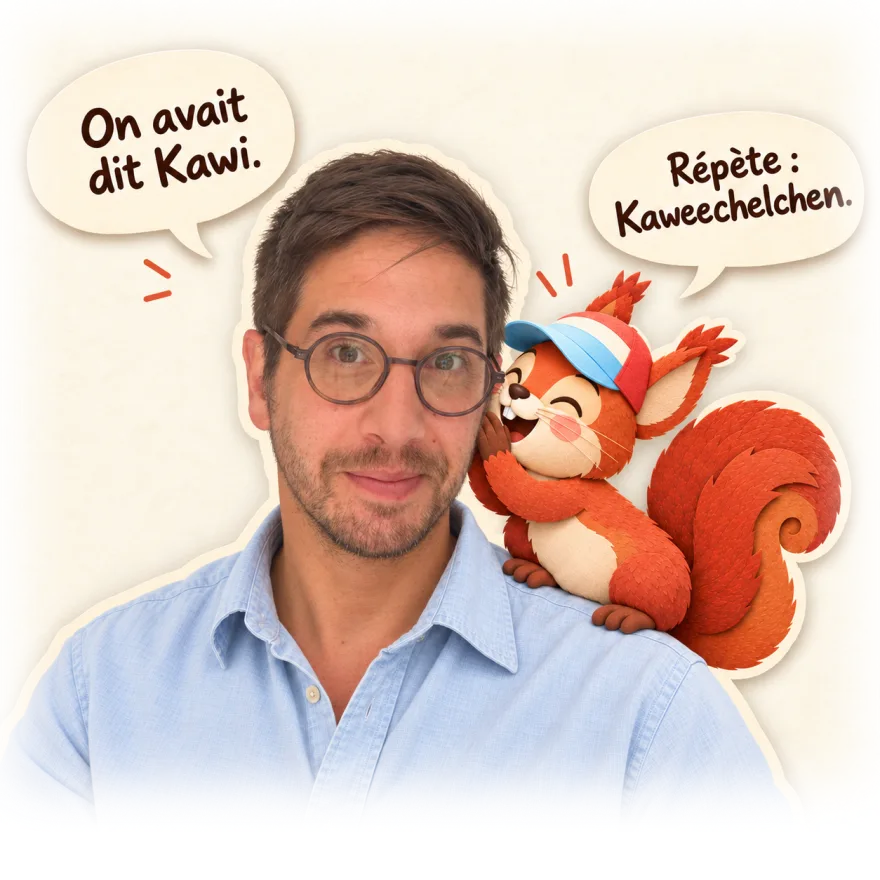
Steven, dad and founder of Kawi